


JPartEXport
-All works created/handcrafted by Japanese artists in Japan
-Made-to-order commissions available upon your request
-Worldwide shipping from Japan
-Insurance coverage included during shipping
-Please ask anything before your purchase
-

Handcrafted Silk/Cotton Card Case
¥5,000
Handcrafted Silk/Cotton Card Case Size: 7 x 10 cm Carry a piece of Japanese tradition in your pocket with these exquisite card cases, meticulously handcrafted from authentic Kimono and Obi fabrics. These cases are designed for the modern lifestyle, offering a sophisticated way to organize your credit cards or business cards. Each piece is unique, featuring intricate patterns and the luxurious texture that only genuine Japanese silk and high-quality woven textiles can provide. From delicate floral motifs to bold geometric designs and classic stripes, these cases represent the diverse beauty of Japan’s textile history. Compact, lightweight, and durable, they add a touch of timeless elegance to your professional or daily interactions. It is more than just an accessory—it is a sustainable way to preserve the artistry of the Kimono in a contemporary form.
-

Woven Elegance: Obi Framed
¥45,000
Title: "Woven Elegance: Obi Framed" Technique: Hyoso, Urauchi, (Traditional Japanese mounting Technique.) Artist: Hiroko Nakamura The Eternal Radiance of Kyoto: Hand-Woven Silk Obi Art This exquisite wall art is a masterclass in traditional Japanese craftsmanship, breathing new life into a vintage silk Obi (the formal sash worn with a Kimono). Centered on the iconic motif of the Goshoguruma (Imperial Carriage) and seasonal fans, this piece evokes the aristocratic elegance of ancient Kyoto. The rich, hand-woven gold threads and vibrant autumnal hues capture the fleeting beauty of a royal procession. What makes this work truly unique is the integration of Hyousou—the traditional mounting technique used for hanging scrolls. The delicate silk fabric has been meticulously reinforced with hand-made Washi (Japanese paper) to ensure its preservation for generations. Encased in a minimalist natural wood frame, this piece bridges the gap between Edo-period textile artistry and modern interior design. It is not merely a decoration, but a fragment of Japanese history repurposed as a timeless masterpiece for your home.
-

Thunder spirit "Raijin"
¥80,000
English title: "Thunder spirit" Japanese title: "Raijin" (雷神) Size: 33.3 × 24.2 cm Medium: Acrylic gouache, Deneb paper Artist: Kuniyoshi Masahiro In this vibrant original work, artist Kuniyoshi Masahiro reimagines Raijin, the ancient Japanese god of thunder, lightning, and storms. While traditionally depicted as a fearsome, muscular demon, Kuniyoshi’s interpretation offers a unique blend of folk-art charm and modern stylization. The figure is captured in a dynamic, rhythmic pose atop celestial clouds, framed by the iconic circular arc of drums used to create the sound of thunder. The use of a luminous gold background provides a divine contrast to the spirit's pale complexion and the intricate blue patterns of his traditional attire.
-

”Japanese Folk Tale-ish Persimmon and Baby”
¥80,000
English Title: "Japanese Folk Tale-ish Persimmon and Baby" Japanese Title: "Nihon mukashi banashi fu kaki to akachan" Artist: Kuniyoshi Masahiro Year of Production 2021 Size 22.4cm × 15.7cm Medium Acrylic Gouache, Japanese Kumohada Hemp Paper This enchanting piece by Kuniyoshi Masahiro draws inspiration from the timeless charm of Japanese folk tales, presenting a single, radiant persimmon as a central motif. The artwork is rich with cultural echoes, inviting viewers into a world of traditional wonder. The dominant feature is a perfectly ripe, plump persimmon, rendered in vibrant shades of orange with a fresh green calyx. It floats majestically against a dynamic background of swirling blues, whites, and yellows, creating a sense of ethereal movement, as if carried on gentle currents of wind or spirit. The background's brushstrokes are energetic yet harmonious, reminiscent of ancient Japanese painting styles, with stylized white and gold clouds (often seen in traditional art symbolizing heavenly realms or auspicious omens) circling the fruit. Perched atop the persimmon is a small, endearing baby figure, clad in what appears to be traditional Japanese attire, including a tiny hakama-like bottom and a topknot. This "baby" figure embodies a sense of innocence, curiosity, and connection to nature and heritage. Its presence elevates the persimmon from a mere fruit to a vessel of adventure, perhaps hinting at a journey or a moment of discovery within a mythical landscape.
-

”Sooooo Many Persimmons! The Baby Explorer”
¥80,000
English Title: “Sooooo Many Persimmons! The Baby Explorers” Japanese title: "Kohhhnani ippai kakiga nattayo akachan tankentai" Size: F4 , 33.3 × 24.2 cm Medium and material : Acrylic gouache, Deneb paper Artist: Kuniyoshi Masahiro This vibrant and whimsical piece by Kuniyoshi Masahiro captures the joy and abundance of a bountiful persimmon harvest, infused with a playful, surreal twist. The canvas is bursting with rich, warm hues of orange, yellow, and gold, depicting a densely packed cluster of persimmons (kaki). The artist uses a striking contrast of the fruit's golden-orange flesh with its deep green core, creating a pattern that is both decorative and inviting. The texture, created with acrylic gouache, gives the piece a bold, graphic quality. The true delight of the painting lies in the small, imaginative figures nestled within the fruit: The Baby Explorers. These tiny, nude figures are seen playing, climbing, and resting inside the sweet, sliced persimmons. They transform the simple act of a harvest into a magical, miniature world—a secret landscape where the fruit becomes a cozy home or an adventurous playground. This charming narrative evokes a feeling of innocence, curiosity, and comfort. It suggests a hidden life within nature and reminds the viewer to find wonder in the everyday. The babies represent a pure state of being, completely at ease and surrounded by the earth's sweet gifts. Why You'll Love This Piece Vibrant Color Palette: The strong use of orange and yellow brings energy and warmth to any space. Unique Whimsy: It's a conversation starter, blending realism (the fruit) with surreal imagination (the babies). Artist Signature: The piece includes the artist's signature and seal in the bottom left, authenticating the original work. Perfect for: Kitchens, dining areas, children's rooms, or any space needing a touch of joyful, Japanese-inspired art. This original painting is a celebration of life, nature, and the sheer fun of imagination.
-

Cat Panel #4
¥9,000
Cat panel #4 18.2 x 14.0 x 1.7 cm Wooden panel Cotton clothes Japanese traditional paper Hyoso is a traditional craft of mounting artworks using adhesives to glue together paper and fabric. This technique is utilized in various invaluable elements of Japanese architecture including fusuma doors, kakejiku hanging scrolls, and shōji screens. All the works by Hyoso iS made with a technique of Backing. Backing is the process of gluing Japanese paper to the backside of a picture or calligraphy work to give it a more vivid look. This process permits the lasting preservation of the artwork. Of all the processes for mounting, it is the the most difficult and the important. A backed artwork will remain valid for years to come. A cloth and another cloth are pasted together, but there are no steps neither gaps; it is tailored as if it were a single piece of cloth. This technique is the tradition itself. 猫パネル#1 18.2 x 14.0 x 1.7 cm 木製パネル 綿布 和紙 紙や布を接着剤で貼り合わせる伝統工芸、「表装(ひょうそう)」。この技法は、襖や掛軸、障子など、日本建築の伝統要素の一つです。 表装作品はすべて「裏打ち」という技法で作られています。 裏打ちとは、絵や書道作品の裏側に和紙を糊付けすることで、より鮮やかな表情を出すことができる技法です。作品を永く保存することができ、修復しやすい状態で、保管、展示することの出来る、伝統的な技術です。 表装の工程の中でも、裏打ち作業は最も難しく最も重要な工程です。 模様や素材の異なる布と布を貼り合わせますが、段差も隙間もなく、まるで一枚の布のように仕立てられます。 この技術こそが、日本の伝統そのものです。
-

Cat Panel #3
¥9,000
SOLD OUT
Cat panel #3 18.2 x 14.0 x 1.7 cm Wooden panel Cotton clothes Japanese traditional paper Hyoso is a traditional craft of mounting artworks using adhesives to glue together paper and fabric. This technique is utilized in various invaluable elements of Japanese architecture including fusuma doors, kakejiku hanging scrolls, and shōji screens. All the works by Hyoso iS made with a technique of Backing. Backing is the process of gluing Japanese paper to the backside of a picture or calligraphy work to give it a more vivid look. This process permits the lasting preservation of the artwork. Of all the processes for mounting, it is the the most difficult and the important. A backed artwork will remain valid for years to come. A cloth and another cloth are pasted together, but there are no steps neither gaps; it is tailored as if it were a single piece of cloth. This technique is the tradition itself. 猫パネル#1 18.2 x 14.0 x 1.7 cm 木製パネル 綿布 和紙 紙や布を接着剤で貼り合わせる伝統工芸、「表装(ひょうそう)」。この技法は、襖や掛軸、障子など、日本建築の伝統要素の一つです。 表装作品はすべて「裏打ち」という技法で作られています。 裏打ちとは、絵や書道作品の裏側に和紙を糊付けすることで、より鮮やかな表情を出すことができる技法です。作品を永く保存することができ、修復しやすい状態で、保管、展示することの出来る、伝統的な技術です。 表装の工程の中でも、裏打ち作業は最も難しく最も重要な工程です。 模様や素材の異なる布と布を貼り合わせますが、段差も隙間もなく、まるで一枚の布のように仕立てられます。 この技術こそが、日本の伝統そのものです。
-

Japanese Wind Spirit
¥80,000
Artist: Kuniyoshi Masahiro Japanese Title: Fujin (風神) Size: F4 (33.3 × 24.2 cm) Medium: Acrylic gouache on Deneb paper This vibrant painting captures Fujin (風神), the Japanese God of Wind, in a dynamic and striking pose. Fujin is one of the eldest deities in Shinto and Buddhist mythology, often depicted as a powerful, demonic figure who commands the winds. Kuniyoshi Masahiro portrays the wind god with vivid green skin, glowing golden eyes, and a mischievous smile, setting him apart from the common fearsome depictions. He is shown actively running or leaping amidst fluffy white clouds on a radiant gold background, symbolizing his heavenly domain. Over his shoulders, he carries the large, inflated bag of winds, which is the source of all the world’s breezes and storms, represented here by a powerful white swirl. The detailed, traditional motifs on his blue garment and the fierce energy in his stance pay homage to the classic iconography of this essential figure. This artwork is a modern, colorful tribute to a fundamental force of nature and a legendary protector of Japan (known for the divine winds, or Kamikaze, that repelled invaders). It brings a bold, mythological statement to any space.
-
Japanese Aqua Spirit
¥80,000
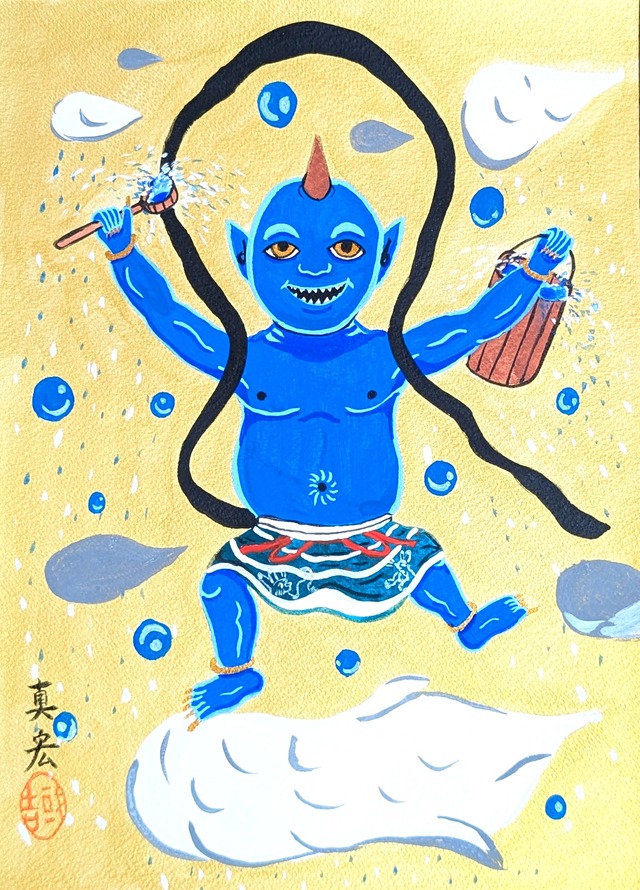
English title: "Japanese Aqua Spirit" Japanese title: "Suijin" (水神) Size: F4 , 33.3 × 24.2 cm Medium: Acrylic gouache on Deneb paper Artist: Kuniyoshi Masahiro In Japanese mythology, ”Suijin” = "Japanese Aqua Spirit" the deity of water, is believed to dwell in all places connected to water—rivers, lakes, seas, and rain. Since ancient times, people have revered Suijin, offering prayers and festivals in gratitude and awe, for water both nurtures life and crops, yet can also bring floods and calamities. This artwork depicts a blue-skinned water deity against a radiant golden background. At the center stands a traditional Japanese god of water, floating dynamically upon a cloud and scattering water around. In his right hand, he holds a ladle; in his left, a wooden bucket—his pose embodying the power to command water itself. The blue body symbolizes purity, vitality, and the essence of water, while the sharp teeth and red horn represent the untamed and awe-inspiring force of nature. Through touches of human humor, the piece expresses both reverence for water—nature’s blessing—and respect for the deity who governs it. Where there is water, there is a water god. Perhaps the water within our hearts, too, is ruled by a Suijin that resides within us.
-

Archaic Three-Faced Standing Statue
¥500,000
Size : l25 x w25 x h58 cm Weight : 3.5 kg Material : Pottery, Ceramic glaze Artist : Yuzan Takahashi (高橋 遊山) Made in Fukushima, by hand "With my first, second, and third eye, I see you. I see everything about you."
-

The Single Horn "Ikkaku"
¥100,000
SOLD OUT
From the mist of ancient dreams, it emerges—quiet, noble, unseen. A horn of light, a gaze of calm. Not beast, not legend, but a breath between worlds. Who summoned it? Why now? The one-horned spirit stands still, as if waiting for your story to begin. Size: Small hand size Material: Wood
-
Untitled #2
¥100,000
SOLD OUT
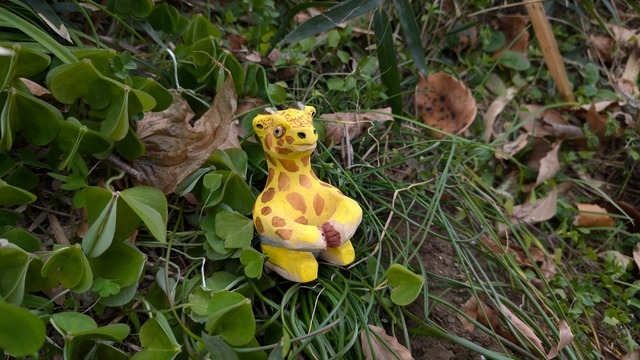
Palm-sized artwork filled with charm! Where did you come from, little one in yellow? Sitting so still, legs folded just so— With your fundoshi tied and a secret to go, Peeking from the hush of the brush and the green, Did you come, perhaps, to find me unseen? Size: Small hand size Material: Wood
-

Untitled #1
¥100,000
SOLD OUT
Palm-sized artwork filled with charm! Who gazes from the quiet green? A tiny soul lingers in the hush— Fairy, spirit, or a whisper of nature’s magic? Born of leaves and light, it watches, still and unseen. Size: Small hand size Material: Wood
-

Hoping dragon "Koryu"
¥300,000
===Story==== The dragon has seen thousands—no, millions—of worlds. The dragon is called the Dragon of Fortune, a being who wishes for the happiness of all living things. The dragon once said: "No one finds true happiness through conflict. Cherish life. Respect one another. Only by wishing happiness for each other can we find happiness ourselves." Now, perhaps, it is time for us to reflect. To consider the conflicts in our world today— What do they truly bring? What can we do? What should we do? ========== English Title "hoping dragon" Japanese Title "Kouryu" (Original Japanese:幸龍) 345 x 720 mm Japanese traditional paper Water color Acrylic paint
-

Bastet "Bastet-Shin"
¥150,000
The God, Bastet. She is transformed into a goddess who protects people from disease and evil spirits, serving as the "nanny of kings" and protector of the Pharaohs in Egyptian. Kuniyoshi Masahiro expresses the protective side of the pharaoh and the dark historical background in the other side. The existence of Bastet gets changed a long time with the era and what people want to believe. We would also be the one, we can not only have a different perspecrive, but also change each side as the Bastet has changed. The world can be covered by different filter through your eyes. English title "Bastet" Japanese title "Bastet-Shin" 39x23.7x1.5cm Wooden panel Paper Acrylic gouache Water color pen Pencil
-

Cat panel #2
¥9,000
SOLD OUT
Cat panel #2 18.2 x 14.0 x 1.7 cm Wooden panel Cotton clothes Japanese traditional paper Hyoso is a traditional craft of mounting artworks using adhesives to glue together paper and fabric. This technique is utilized in various invaluable elements of Japanese architecture including fusuma doors, kakejiku hanging scrolls, and shōji screens. All the works by Hyoso iS made with a technique of Backing. Backing is the process of gluing Japanese paper to the backside of a picture or calligraphy work to give it a more vivid look. This process permits the lasting preservation of the artwork. Of all the processes for mounting, it is the the most difficult and the important. A backed artwork will remain valid for years to come. A cloth and another cloth are pasted together, but there are no steps neither gaps; it is tailored as if it were a single piece of cloth. This technique is the tradition itself. 猫パネル#1 18.2 x 14.0 x 1.7 cm 木製パネル 綿布 和紙 紙や布を接着剤で貼り合わせる伝統工芸、「表装(ひょうそう)」。この技法は、襖や掛軸、障子など、日本建築の伝統要素の一つです。 表装作品はすべて「裏打ち」という技法で作られています。 裏打ちとは、絵や書道作品の裏側に和紙を糊付けすることで、より鮮やかな表情を出すことができる技法です。作品を永く保存することができ、修復しやすい状態で、保管、展示することの出来る、伝統的な技術です。 表装の工程の中でも、裏打ち作業は最も難しく最も重要な工程です。 模様や素材の異なる布と布を貼り合わせますが、段差も隙間もなく、まるで一枚の布のように仕立てられます。 この技術こそが、日本の伝統そのものです。
-

Cat panel #1
¥9,000
Cat panel #1 18.2 x 14.0 x 1.7 cm Wooden panel Cotton clothes Japanese traditional paper Hyoso is a traditional craft of mounting artworks using adhesives to glue together paper and fabric. This technique is utilized in various invaluable elements of Japanese architecture including fusuma doors, kakejiku hanging scrolls, and shōji screens. All the works by Hyoso iS made with a technique of Backing. Backing is the process of gluing Japanese paper to the backside of a picture or calligraphy work to give it a more vivid look. This process permits the lasting preservation of the artwork. Of all the processes for mounting, it is the the most difficult and the important. A backed artwork will remain valid for years to come. A cloth and another cloth are pasted together, but there are no steps neither gaps; it is tailored as if it were a single piece of cloth. This technique is the tradition itself. 猫パネル#1 18.2 x 14.0 x 1.7 cm 木製パネル 綿布 和紙 紙や布を接着剤で貼り合わせる伝統工芸、「表装(ひょうそう)」。この技法は、襖や掛軸、障子など、日本建築の伝統要素の一つです。 表装作品はすべて「裏打ち」という技法で作られています。 裏打ちとは、絵や書道作品の裏側に和紙を糊付けすることで、より鮮やかな表情を出すことができる技法です。作品を永く保存することができ、修復しやすい状態で、保管、展示することの出来る、伝統的な技術です。 表装の工程の中でも、裏打ち作業は最も難しく最も重要な工程です。 模様や素材の異なる布と布を貼り合わせますが、段差も隙間もなく、まるで一枚の布のように仕立てられます。 この技術こそが、日本の伝統そのものです。
-

The Girl with the Viola Hair "Violagami no shojo"
¥150,000
English title: The Girl with the Viola Hair Japanese title: "Violagami no shojo" 27.4x22.3x2cm Acrylic gouache Canvas
-

How to born a hope "Kibo no umarekata"
¥200,000
English Title : How to born a hope Japanese Title "Kibo no umarekata" Do you know how a hope is born? To be free, change your color, see the fact and the ideal. You will find your hope much better. 53x33.3x2cm Acrylic gouache Canvas
-

Flying dragon in the sky "Sora tobu ryu"
¥200,000
The flying dragon reflects your heart. English title : Flying Dragon in the sky Japanese title : Sora tobu ryu 27.4 x 22.3 x 2 cm canvas Acrilic gouache
-

Bubble Drago "Awa Ryu"
¥50,000
Enjoy!! What color are you?? There must be some bubbles that won't pop! Or disappear with popping bubbles? Title in English : "Bubble Dragon" in Japanese "Awa Ryu" 242×272mm Japanese card board Water color pen
-

Noir "Noir"
¥10,000
Maybe they are in your darkness too? Title "Noir" 148×100mm Kent paper Japanese black brush pen Watercolor pen
-

Dragon Flight "Ryu Hiko"
¥50,000
Title in English "Dragon Flight" Title in Japanese "Ryu Hiko" Artist : Kuniyoshi Masahiro 242×272mm Water color pens
-
Baby Asura "Akachan Ashura"
¥200,000
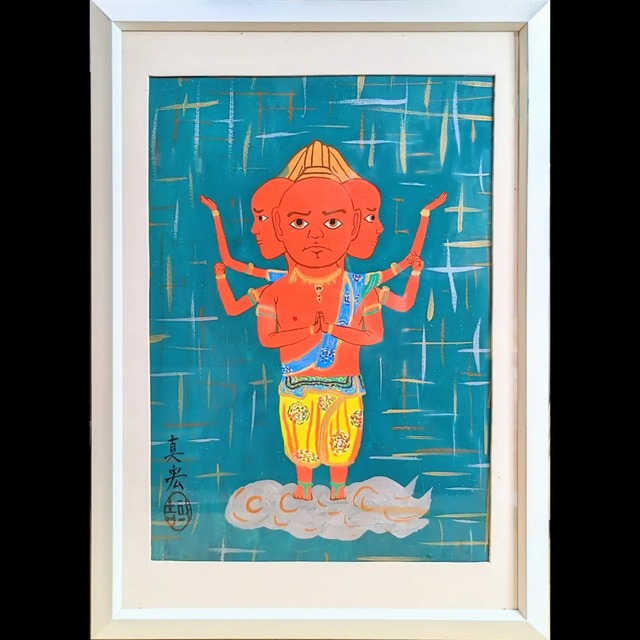
Living in purity. This baby Asura knows everything about what is happening around him. Asura is an ancient icon as a god in Persia who bestows blessings on the earth or the world. Title in English "Baby Asura" Title in Japanese "Akachan Ashura" 285 x 397 mm Acrylic gouache Water color pen With frame